Room on the broom? Making space for play in a crowded curriculum
Play is quietly disappearing from early years settings under policy and data pressure. Discover why it matters and how to make the case to senior leaders.
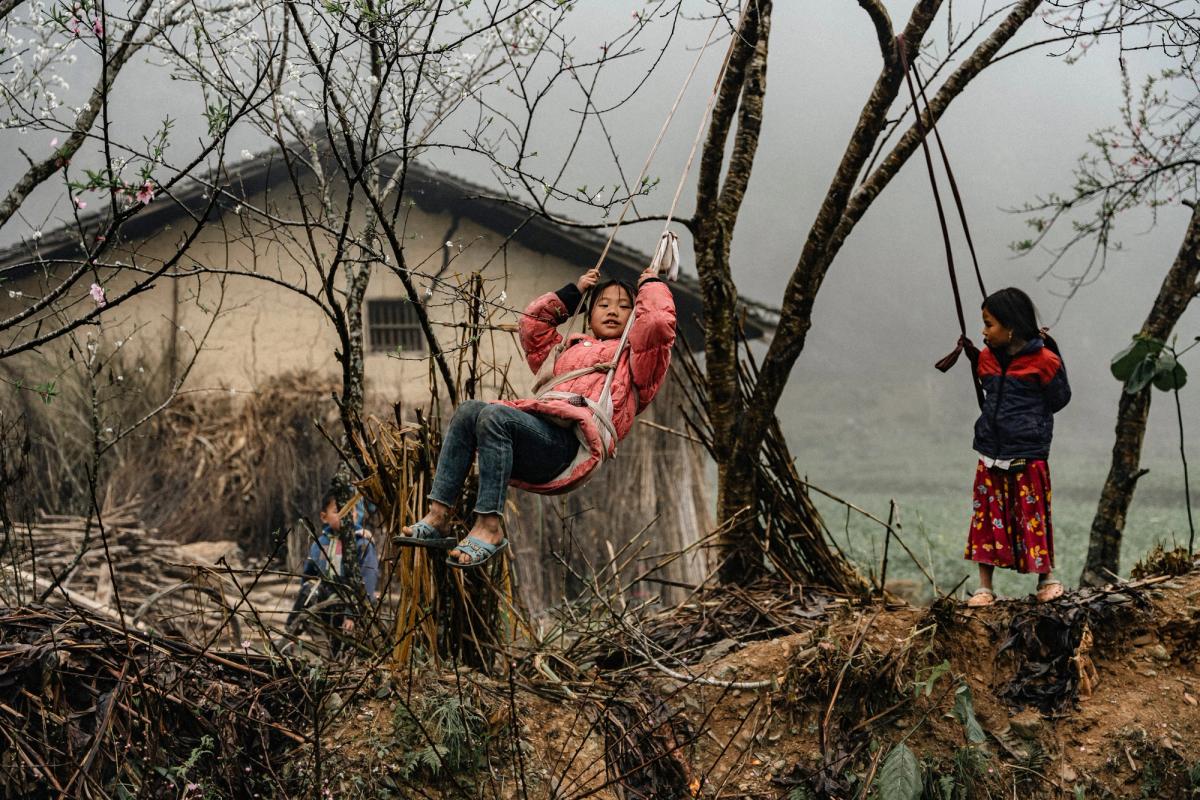
Think back to your own childhood. Where did you play, who with, and who was in charge? For many people of my generation, the answer is: outside, with whoever was around, and sometimes nobody. We built dens, invented games whose rules changed every five minutes, fell out, made up and came home when it got dark. No adult planned it, assessed it or wrote it up. My younger colleagues may recognise some of this, though not all, and those just starting out in their careers probably recognise very little. The truth is that play has been quietly disappearing from children's lives over the last fifty years, so slowly that you might not have noticed.
Now picture a four-year-old starting Reception this September. Their week may already include swimming lessons, a structured holiday club or several hours on a screen, and the pressure to show evidence of "readiness" arrives almost before their coat is on the peg. You only have to look on social media to see the pressure teachers are under to plan inputs, interventions and enhancements, and the message is clear: get them learning as soon as you can! I understand why. Through the lens of traditional education, we all know what learning looks like: children sitting at tables, listening to the teacher and recording in books.
But what if we are looking at learning the wrong way? What if the child absorbed in building a den, negotiating the rules of a game or pouring water from one jug to another isn't waiting to start learning, but is already doing some of the most important learning of their life? We tend to measure what is easy to see, a sound recognised or a number written, and overlook what is harder to capture: persistence, curiosity, self-control and the confidence to have a go. I've never believed play is a nice extra we fit in once the real learning is done. It is the real learning, and the evidence backs that up.
What the evidence tells us
Play is how young children build the things everything else rests on: self-regulation, language, getting along with others and bouncing back when things go wrong. The American Academy of Pediatrics describes play as a unique opportunity to build these skills, and warns that early childhood programmes are being pushed to become more formal (Yogman et al., 2018). What strikes me most is that it is free play that seems to matter. A large Australian study of more than 2,000 children found that the more time young children spent in unstructured play, the better their self-regulation was years later (Colliver et al., 2022). David Whitebread's classroom observations found something similar: children showed the most self-regulation when they were playing in small groups they had chosen, without an adult directing them (Whitebread et al., 2009).
Gray, Lancy and Bjorklund (2023) make a powerful case that rising anxiety and depression in young people is linked to the steady loss of chances to play, roam and do things without adults in charge. In my experience, play is often where we see what really interests a child, how they communicate and what they can do once the demands are lifted.
It is good to see the sector rallying around this. Aaron Bradbury's Play Matters (2025), a free guide written by more than sixty early childhood professionals, has been widely shared and talked about. Its message is simple and one I wholeheartedly agree with: play is vital, play is learning, play is powerful, and play needs to be given its rightful place in policy and practice.
A short social history of shrinking play
In just two generations, childhood in England has moved from the street to the living room, and from children's control to adults'. In 1971, 86% of primary-age children were allowed to walk home from school on their own. By 2010 it was just 25%, largely because parents were frightened of traffic (Shaw et al., 2013) and strangers. Today, three-quarters of 5 to 12-year-olds play outside for less than an hour a day, which is less time outdoors than UN guidelines give prison inmates (Persil, 2016). That statistic stops me in my tracks every time I read it.
School has squeezed play too. Children in Key Stage 1 now have 45 minutes less break time a week than they did in 1995, cut to make room for the curriculum or to manage behaviour, and pupils still have no right to a break (Baines and Blatchford, 2019). Meanwhile, those of us who have been around a while have watched the policy landscape tighten, step by step:
Year
What changed
2021
Reformed EYFS and statutory Reception Baseline Assessment introduced
2017
Ofsted's Bold Beginnings pushes for more formal teaching in Reception
2012
Year 1 Phonics Screening Check introduced
2010
National Play Strategy for England abandoned
2008
EYFS becomes statutory from birth to five
1988
Education Reform Act brings the National Curriculum and national testing
I don't doubt that each step was taken with good intentions. But together they have given us a childhood more supervised, more scheduled and more measured than any before it.
From free time to scheduled time
The time children have lost from free play hasn't become empty time. It has been filled, mostly with activities that adults organise, supervise or design. In one poll, parents said their primary-aged children had just an hour and a half of unstructured free time a day, and that once school, homework and clubs were added up, some children were "working" up to 46 hours a week, nine hours more than the average adult (Center Parcs and Wass, 2016). Since the pandemic, children's physical activity has become more dependent than ever on adult-led clubs, something researchers have called "the new normal" (IJBNPA, 2023). And screens are reaching children younger and younger: more than a third of parents of three to five-year-olds now say their child uses social media (Ofcom, 2025).
I want to be clear that none of this is a criticism of parents. Most are doing what they have been told is best: keeping their children safe, giving them opportunities and making sure they don't "fall behind", as parents are, on the whole, entirely invested in their children and want the very best for them.The problem is that almost every message they hear is about risk and achievement, and hardly any are about the value of simply being left to play.
Reception: where the squeeze is felt most
Reception should be the last protected space for play in a child's school life. Instead, it is where the pressure arrives first. The government wants 75% of five-year-olds to reach a "good level of development" (GLD) by 2028, against 68.3% last year, while school staff now judge more than a third of children not ready for school (Kindred Squared, 2026). Teachers tell me about more speech and language delay, more children struggling to manage their feelings and less experience of playing with others. The irony isn't lost on me: the skills children most lack are exactly the ones play builds, yet the answer is too often more formal teaching.
The research shows what this looks like in classrooms. Children at risk of missing the GLD are often taken into phonics, literacy and maths interventions that pull them away from play, and one teacher spoke of her sadness at being "bound to these statistics" (British Educational Research Journal, 2023). In a survey of more than 2,000 primary teachers, the word "pressure" came up 97 times when they talked about the Year 1 phonics check (Wyse and Bradbury, 2022). And the Hundred Review found that it is often senior leaders who push Reception teachers towards more formal approaches (Early Excellence, 2017).
There may, though, be some reason for cautious hope. The 75% target, along with plans for local targets in law and data telling schools what their GLD score "should" be, came from the previous Education Secretary (Phillipson, 2025). Her successor has struck a very different note, telling the Labour conference that childhood needs to be reimagined around "play, exploring, freedom, belonging and happiness" (Powell, 2026). I'll be watching closely to see whether the target, and the pressure it puts on Reception, survives that shift.
Do our headteachers know about early years?
This is the question I most wanted a number for, and honestly, I couldn't find one. As far as I can tell, there is no national data on how many primary heads have ever taught in Nursery or Reception, but my experience over forty years in the sector tells me the number is low. We collect data on almost everything children do in Reception, but not on whether the people setting its direction have ever taught there. Julie Fisher (2022) found that many heads of newly amalgamated primary schools had previously led junior schools and had never taught below Year 3, and that the most abrupt transitions into Year 1 tended to be in schools led by heads without early years experience. She argues that every applicant for primary headship should have early years experience or an early years leadership qualification, as Scotland already offers, and I couldn't agree more. Even Ofsted (2017) thought it worth asking schools whether anyone on their senior team had taught Reception.
If you are a head, a Reception teacher or an early years lead, I'd love to hear from you. Does your senior leadership team include someone who has taught in the EYFS, and what difference does it make?
So what can we do?
To every Early Years lead reading this: you do not need permission to stand up for play. You are the expert in how young children learn, and the evidence is on your side. When you are asked to formalise, to pull children out for yet another intervention or to replace play with formal tasks, be ready with your evidence, share the stories of children who found their voice in the role-play area or learned to persevere building a den, and point to the research showing that children who play more go on to regulate themselves better (Colliver et al., 2022). Good outcomes are not achieved by starting formal learning sooner. They come from children who are confident, curious, regulated and ready to learn, and that is exactly what play builds. Hold your nerve, trust your expertise and keep making the case. The children in your care are counting on you to and each of us can protect a little more time, space and trust for children to play.
Here are a few questions I'd invite you to sit with:
- If you lead a school: who on your senior team has taught in the EYFS? When children are pulled into interventions, what play are they missing? And is break time ever taken away as a sanction from the very children who need it most?
- If you teach in the early years: how much of your day is genuinely child-initiated? Try tracking it for a week. Could you gather evidence of learning from play, rather than stopping play to gather evidence? And what do you learn about children with SEND in play that you would never see at a table?
- If you are a parent or carer: when did your child last have an hour with nothing planned and no screen? Is there one small freedom you could hand back this year?
Play isn't the opposite of learning, and it isn't a reward for finishing the "real" work. It is how young children become capable, confident people who are ready to learn. If we keep squeezing it out, we shouldn't be surprised when they arrive at school less ready, less resilient and less happy, nor should we be surprised when there is a mental health crisis in children and young people. So I'll leave you with the question I started with: what did play give you as a child, and what do you want for the children in your care today?
References
Baines, E. and Blatchford, P. (2019) School Break and Lunch Times and Young People's Social Lives: A Follow-up National Study. London: UCL Institute of Education / Nuffield Foundation.
Bradbury, A. (ed.) (2025) Play Matters. Early Years Reviews.
British Educational Research Journal (2023) Identifying tensions between school readiness policy and teacher beliefs, knowledge and practice in early childhood education. DOI: 10.1002/berj.3937.
Center Parcs and Wass, S. (2016) Children are 'working' longer hours than their parents. Survey of 2,000 UK adults and 1,000 primary-aged children.